https://coleporter.bluemusicgroup.com
 Live Jazz on Broadway
 Two for the Road
 Taste of Honey
 At the Vanguard
 The Poll Winners Vol 2
 Tony Bennett Swings with Count...
 Oscar Peterson Plays & Sings
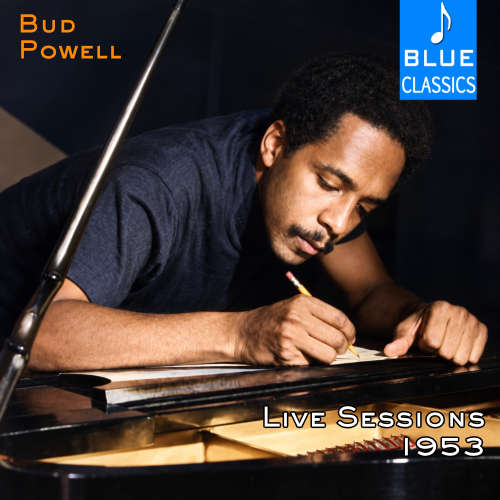 Live Sessions 1953
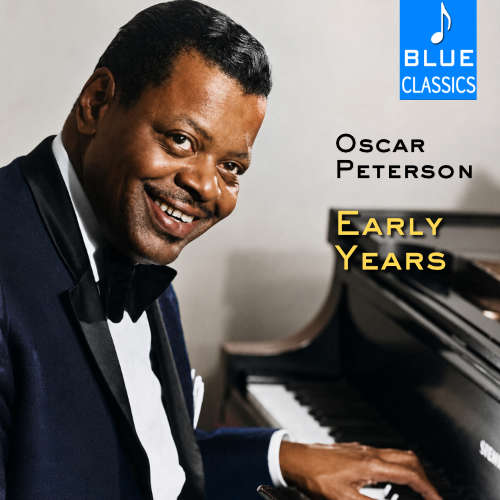 Early Years
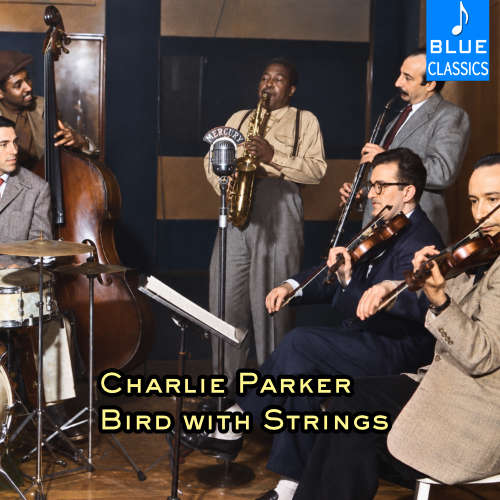 Bird with Strings
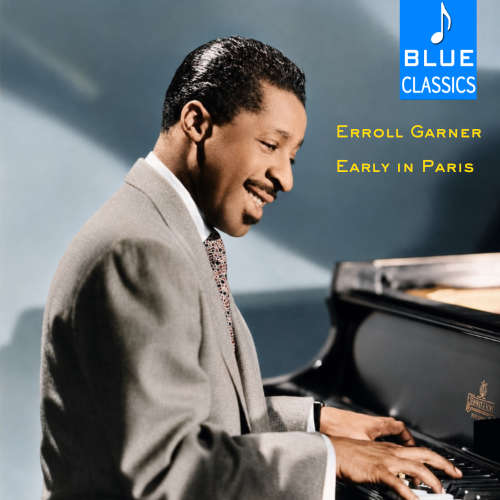 Early in Paris
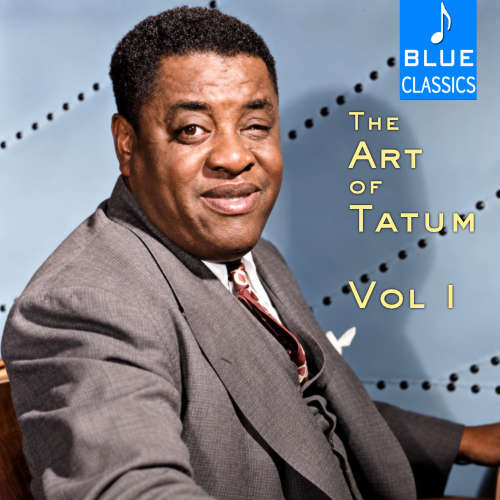 The Art of Tatum Vol 1

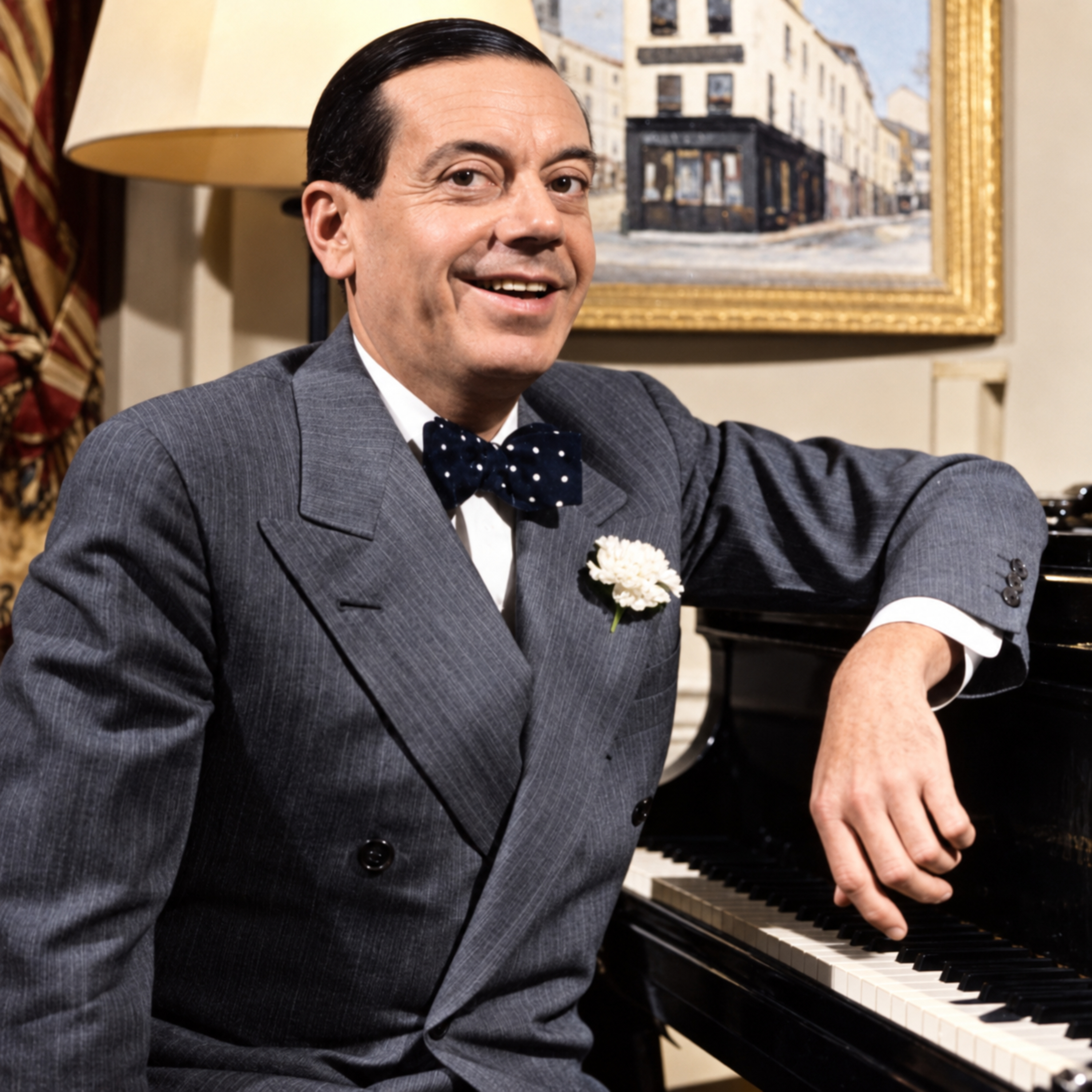
Cole Porter - composer & lyricist
Cole Porter (b. June 9, 1891 – d. October 15, 1964) was an American composer and lyricist whose career was unusual even within the highly competitive world of American musical theatre. Unlike most successful Broadway songwriters of his generation, Porter wrote both the music and the lyrics for his songs. His catalogue includes Broadway and West End musicals, Hollywood films, and hundreds of individual songs, many of which became part of the standard repertoire of popular and jazz musicians. His songs are known for their sophisticated melodies, distinctive harmonic writing, and carefully constructed lyrics, often marked by wit, wordplay and an urbane tone.Porter was born June 9, 1891, in Peru, Indiana, to Kate Cole and Samuel Fenwick Porter. He grew up in a prosperous family, and his maternal grandfather, James Omar Cole, was a successful businessman who played an important role in the family's finances. Porter was musically inclined from childhood. He studied violin and piano, but preferred the piano, and began composing at an early age.
His grandfather wanted him to follow a conventional professional career. Porter was therefore sent to Worcester Academy and in 1909 entered Yale College, where he studied English and later music. While at Yale he wrote numerous songs and musical productions, including student shows for the university's theatrical organisations. The Library of Congress's Cole Porter Collection documents early compositions dating from this period and the beginning of his professional career.
After Yale, Porter entered Harvard Law School, but he did not remain there. He increasingly concentrated on music and theatre, and during the 1910s he began trying to establish himself as a professional composer. His early Broadway career was not immediately successful, and several of his first productions closed quickly. His first Broadway musical, See America First, opened in 1916 and was not a success.
Porter subsequently spent considerable time in Europe, particularly Paris, where he became part of a cosmopolitan social and artistic environment. He continued composing and developing his craft, while also cultivating the sophisticated style of writing that later became closely associated with his name. During the 1920s he increasingly divided his time between Europe and the United States.
His breakthrough came with Paris, the musical produced in New York in 1928. The show included several songs that helped establish Porter as a significant Broadway songwriter. His growing reputation coincided with a period in which Broadway musical comedy was developing rapidly and audiences were increasingly receptive to songs that could stand independently of their original productions.
Porter also began working in London's West End. His 1928 musical Paris was followed by productions such as The New Yorkers and Fifty Million Frenchmen. These shows helped establish the characteristics that would become central to his work: sophisticated theatrical situations, carefully constructed lyrics, and melodies capable of supporting both stage performance and independent popular-song circulation.
In the early 1930s Porter became increasingly successful in Hollywood as well as on Broadway. His songs appeared in films including The Gay Divorcee, starring Fred Astaire and Ginger Rogers. The film's score included “Night and Day,” one of Porter's most enduring songs. The unusual harmonic character and long, flowing melodic structure of the song made it particularly adaptable to later jazz interpretation.
Porter's ability to write his own lyrics was central to his identity as a composer. He could construct melody, rhythm and verbal accent simultaneously, allowing words to become an integral part of the musical line. His lyrics frequently employed internal rhyme, double meanings, unusual stresses and references to contemporary culture. At the same time, his songs could accommodate very different emotional settings, from comedy and satire to romantic ballads.
In 1934, Porter achieved another major success with Anything Goes. The musical contained songs including “Anything Goes,” “You're the Top,” and “I Get a Kick Out of You.” The score demonstrated how Porter's approach could function within a large Broadway production while also producing songs that quickly acquired independent lives outside the theatre.
During the 1930s, Porter became one of Broadway's most successful composers. His musicals included Red, Hot and Blue, DuBarry Was a Lady, Leave It to Me! and Kiss Me, Kate later in the decade. At the same time, his songs circulated widely through recordings by singers and jazz musicians.
Porter's personal life was also closely connected with the international social world in which he worked. In 1919, he married Linda Lee Thomas, a wealthy socialite from Kentucky. Their marriage lasted until her death in 1954. Porter and Thomas lived for extended periods in Paris and New York and travelled frequently. Their relationship has been described as unusually complex, but Thomas remained an important presence in Porter's life and supported his career.
A major turning point came in 1937, when Porter was seriously injured in a horseback-riding accident. He suffered extensive damage to his legs and underwent numerous operations over the following years. His injuries left him with permanent pain and disability. Despite this, Porter continued composing and working in theatre and film. The accident did not end his career, although it profoundly affected the rest of his life.
Porter's productivity during the late 1930s and early 1940s remained considerable. He wrote songs for Broadway and Hollywood and continued to develop musical theatre projects. His stage works included Panama Hattie, Let's Face It!, Something for the Boys and Mexican Hayride. Songs from this period continued to enter the American popular repertoire.
One of Porter's most important later achievements was Kiss Me, Kate, which opened on Broadway in 1948. The musical was based on the backstage relationship between actors performing Shakespeare's The Taming of the Shrew. Porter provided both music and lyrics, including “Another Op'nin', Another Show,” “Wunderbar,” “So in Love,” “Too Darn Hot,” and “Brush Up Your Shakespeare.” The show became his most successful Broadway musical and marked a major return to the centre of the Broadway theatre after the somewhat uneven reception of some of his wartime productions.
The success of Kiss Me, Kate also demonstrated that Porter's musical language remained effective in a Broadway environment that was changing. By the late 1940s, the American musical was increasingly moving toward greater integration of music, character and dramatic action. Porter nevertheless continued to work within his own approach, where carefully constructed songs could remain both theatrically relevant and musically independent.
During the 1950s Porter continued writing for Broadway and Hollywood. His musicals included Out of This World, Can-Can, Silk Stockings and Happy Hunting. The film version of Can-Can appeared in 1960, while Silk Stockings had opened on Broadway in 1955 and was later made into a film. The Library of Congress's collection contains manuscripts and related material for many of these later productions, offering extensive documentation of Porter's working methods.
Porter's songs continued to be particularly important to jazz musicians. His compositions frequently provided sophisticated harmonic structures that invited improvisation, while their melodies remained recognisable. Among the songs that became standards are “What Is This Thing Called Love?,” “Night and Day,” “Begin the Beguine,” “I've Got You Under My Skin,” “You'd Be So Nice to Come Home To,” “All of You,” and “I Love Paris.”
The relationship between Porter and jazz was therefore somewhat different from that of a composer who consciously wrote jazz. Porter wrote primarily for theatre and popular song, yet his harmonic language and melodic construction proved highly adaptable to jazz. His songs became part of the repertoire of pianists, instrumentalists and singers, often undergoing extensive reharmonisation and improvisational treatment.
One reason for this durability was Porter's command of musical form. He could establish a melody that remained sufficiently distinct to be recognised while allowing the harmonic framework to be reinterpreted. His lyrics also gave singers a strong rhythmic and dramatic structure, which made many of the songs particularly effective in both theatrical and jazz settings.
Porter's health continued to deteriorate as a result of the 1937 accident. He underwent additional surgeries throughout the 1940s and 1950s, including procedures that resulted in the eventual amputation of his right leg in 1958. He increasingly relied on wheelchairs and suffered chronic pain, but continued to compose and participate in the theatrical world.
His final Broadway musical was Silk Stockings, which opened in 1955. Although his productivity subsequently decreased, Porter continued to contribute songs and music to films and stage projects. The 1960 film version of Can-Can was one of his later major screen projects, and the Library of Congress collection includes materials associated with the film adaptation.
Porter's ability to remain active despite severe physical limitations was one of the defining features of his later career. He continued to attend theatre openings, social events and recording sessions and maintained contact with performers and producers. His intellectual and musical interests remained active even as his mobility became increasingly restricted.
Cole Porter died on October 15, 1964, in Santa Monica, California, at the age of 73. He left behind a large catalogue of songs and theatrical works and an unusually extensive documentary record.
The Cole Porter Collection at the Library of Congress contains approximately 2,700 items, including holograph sketches, copyist manuscripts, piano-vocal scores, lyric sheets, correspondence, scripts, programmes, clippings and other material. Eighteen shows are represented, covering twenty-one productions, including film adaptations. More than 280 individual song titles appear in the collection, some surviving only as incomplete sketches. The collection provides an unusually detailed view of Porter's creative process.
Porter's career occupies a distinctive position in American musical theatre because he combined the roles of composer and lyricist at a time when these roles were increasingly divided among specialists. His ability to write both sides of a song allowed him to control the relationship between musical phrase and verbal rhythm in a way that was difficult for many of his contemporaries to achieve.
His collaborations with individual theatre writers, directors and producers varied considerably, but the musical material remained recognisably his. Unlike the Rodgers–Hart or Rodgers–Hammerstein partnership, Porter's work was fundamentally the product of a single songwriter responsible for both the musical and verbal aspects of the songs.
By the time of his death, Porter had become part of the permanent repertoire of American popular music. His songs continued to be performed by Broadway singers, jazz musicians and recording artists, often in arrangements far removed from their original theatrical contexts. The melodies and harmonic structures allowed them to survive outside the shows for which they were written, while the lyrics retained much of their theatrical character.
Porter's legacy therefore extends beyond the Broadway productions of his lifetime. His music connects the worlds of musical theatre, Hollywood, popular song and jazz, and his work remains a substantial part of the repertoire from which later performers have drawn. The Library of Congress collection, with its manuscripts, lyric sheets and production materials, also preserves evidence of how those songs were constructed and revised.
Among the most enduring aspects of Porter's career is the fact that he remained both composer and lyricist throughout most of his major work. His ability to write sophisticated music and highly individual lyrics within the same creative process gave his songs a particular cohesion. From the Broadway successes of the 1920s and 1930s through Anything Goes and Kiss Me, Kate, and into his later work for stage and screen, Porter maintained a musical identity that was distinctly his own.